Proceedings of Machine Learning in Science II • Tübingen

Artificial Scientist Lab

AI for Conceptual Advances in Physics

The Artificial Scientist Lab is part of the Department for Computer Science at the University of Tübingen since June 2025. We are part of the Excellence Cluster for Machine Learning in Science in Tübingen.

We are excited about the potential of artificial intelligence-inspired and -augmented science, and how we can use algorithms in a more "creative" way. We are convinced that intelligence is not sufficient to be a great scientist. There, to make progress, it will be important to learn what humans mean by crucial scientific concepts such as surprise, creativity, understanding, and interest. We have created AIs for designing physics experiments and hardware, several of which were actually built in laboratories, as well as systems for inspiring novel ideas for quantum technologies.

Part of this research has recently been summarized in an article in Scientific American (July 2021), a feature by the National Academies (Nov 2023), a video interview with Quanta Magazine (March 2025) and in German in derStandard (May 2024), SPIEGEL (Nov 2025) or ORF Ö1 (April 2026). We were awarded an ERC StG 2024 called ArtDisQ (Artificial Scientific Discovery of Advanced Quantum Hardware with high-performance Simulators).

Our work is organized around four pillars:

AI-designed experiments

Experiments are our windows to the universe. Yet, the space of all possible experiments is enormously large. Did humans already find all useful experiments, or are there yet undiscovered but exceptional experimental ideas that can lead to new ways to explore the world?

News

News from the Lab

  • 21.05.2026:

    Mario, in collaboration with philosopher Heather Champion, has contributed to the Daedalus special issue on "AI & Science: What Is the Future of Discovery?", together with 33 other contributors such as Demis Hassabis, Yann LeCun, Alán Aspuru-Guzik, Pushmeet Kohli, Joshua Tenenbaum, Carla Gomes, Shirley Ho, Anima Anandkumar, Hartmut Neven, Eric Topol, and many more. The essay by Mario and Heather is called "Philosophy of Autonomous Science: Ten Questions for the Coming Age of Artificial Scientists", dealing with fundamental human traits of scientists such as creativity, curiosity, surprise, interest, and scientific understanding, and how these traits could be translated to artificial scientists.

  • 05.05.2026:

    Congratulations to Carlos and Xuemei for the new preprint paper Automated experimental design for high-probability entanglement generation. Here we are able to find higher-probability setups for the generation of entangled states by using a physical simulator that takes the full pair-production process into account.

  • 29.04.2026:

    Mario's radio interview with ORF's Ö1 is published online, by Robert Czepel.

  • 14.04.2026:

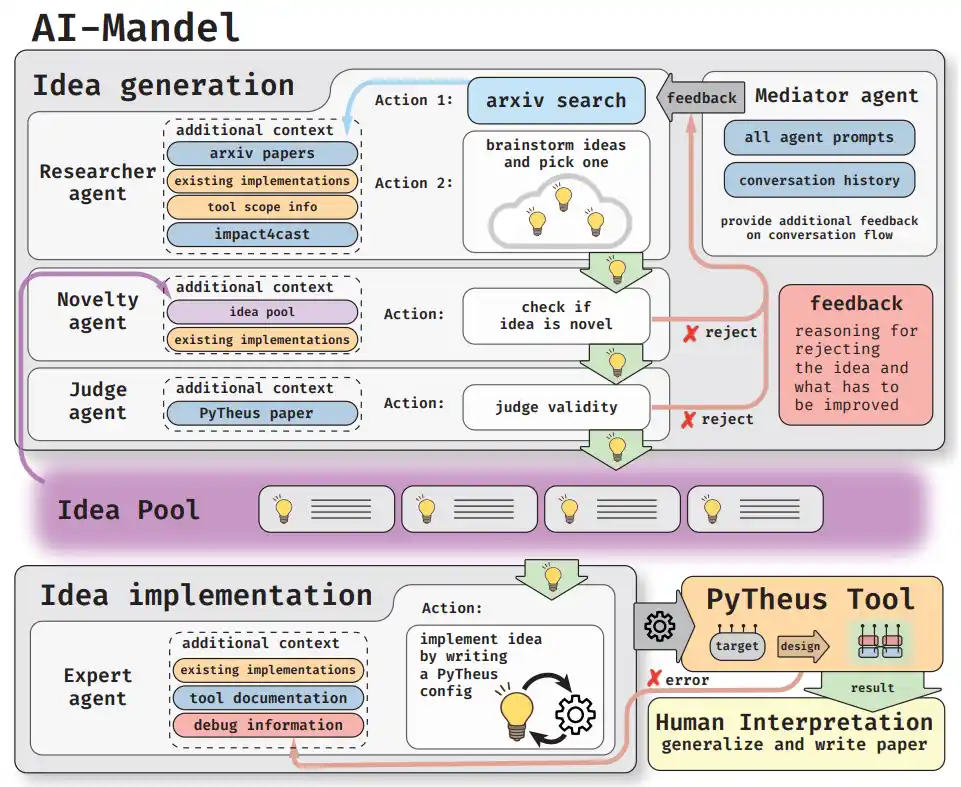
    Congratulations to Sören and Xuemei for having the first paper generated by AI-Mandel, Automated discovery of nonlocal photonic gates , accepted in the respected peer-reviewed physics journal Phys. Rev. Research. The paper started by us asking AI-Mandel to find "something interesting in quantum physics". To the best of my knowledge, it's the first peer-reviewed physics paper ever where the idea and execution were automated, in our case using a multi-agentic LLM system with access to intelligent tools.

  • 13.04.2026:

    Congratulations to Priya for successfully defending the Master thesis on Fine-Tuning Open-Source LLMs for Scientific Idea Generation. Priya will continue her PhD in our group, and we wish much success!

  • 01.04.2026:

    We welcome Soham Basu and Carlo Wenig as new members of the Artificial Scientist Lab. We wish them much success with their PhDs. Also welcome to Felice Huck who starts as a research intern on the intersection of psychology, AI and physics.

  • 20.03.2026:

    Marcello, Pontus, Jonathan, and Mario participated in the "Future of Science" workshop at the IQOQI Vienna, to celebrate 10 years of Melvin with the other co-authors, together with researchers from Mehul Malik's group, Robert Fickler's group, and Radek Lapkiewicz's group.

  • 06.03.2026:

    We just finished an exceptionally interesting workshop here in Tübingen with the developers of FINESSE, the quasi-standard simulator for interferometric gravitational-wave detectors used by most researchers at LIGO and Virgo. We had Andreas Freise, director of the Einstein Telescope, and his team visiting, including Anna Green. Learned a lot, and hope for many exciting future projects. Thank you for visiting!

  • 24.02.2026:

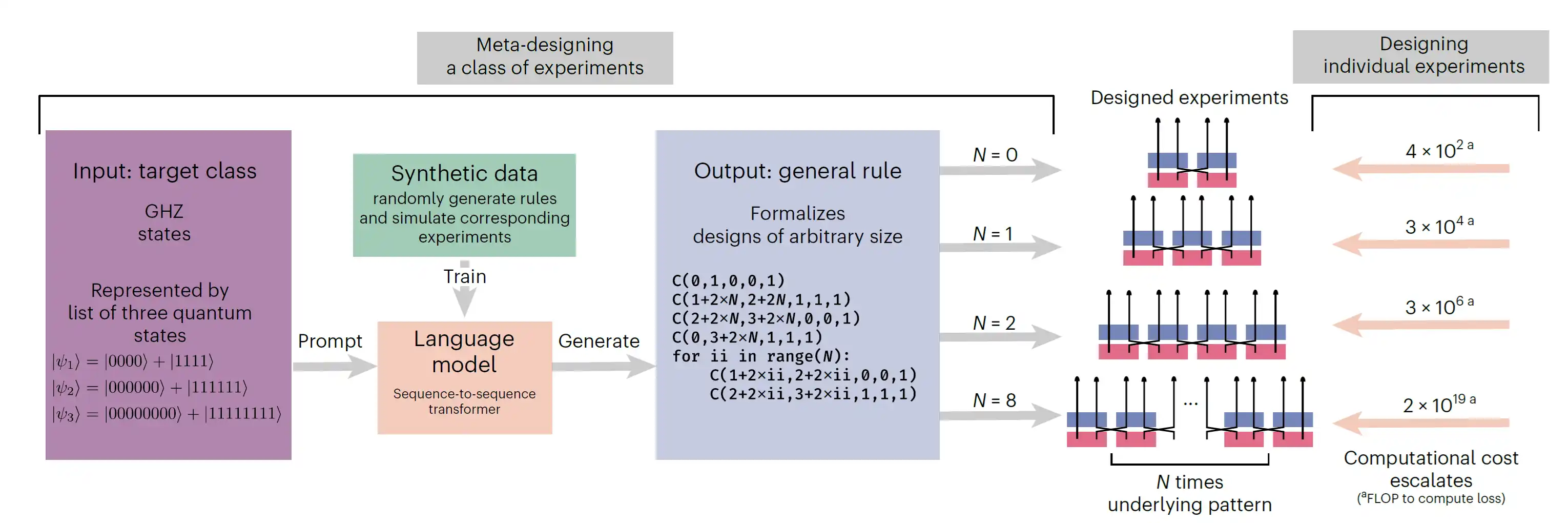
    Paper published in Nature Machine Intelligence: Meta-designing quantum experiments with language models. When we use AI to design new physics experiments, the solutions are often extremely complicated, and it can take days or weeks to understand them, if explanations can be found at all. To get more scientific understanding from AI, we developed a meta-approach: a language model that creates solutions for a whole class of experiments at once. For that, our model writes Python code, and the Python code then creates classes of experiments. The humans can then just read the Python code to understand the generalized principles behind the solutions. Using this approach, we discovered numerous new general design principles of quantum states in quantum optics. The work started 5 (!) years ago when I met Yuhuai (Tony) Wu in Toronto, and at times it seemed so challenging that we were close to giving up a few times. But Sören Arlt, with the help of Tony, Haonan Duan, Felix Li, and Sang Michael Xie, pushed it successfully over the finish line.

  • 01.02.2026:

    Mario joined as an Associate Editor of APS's (American Physical Society) new journal PRX Intelligence. PRX Intelligence was founded in November 2025, with submissions starting in February 2026, by Anatole von Lilienfeld, who had previously already founded IOP's community journal Machine Learning: Science & Technology. PRX Intelligence is a community-driven journal, with active scientists at the Chief Editor, Deputy Editors, and Associate Editor levels, together of course with the Editorial Board, handling the papers. Anatole, who is steering the ship, has wonderful ideas on how to create a truly high-quality peer-review experience, and I can't wait to help. Please submit your best works to us!
Who are we?

Team Members

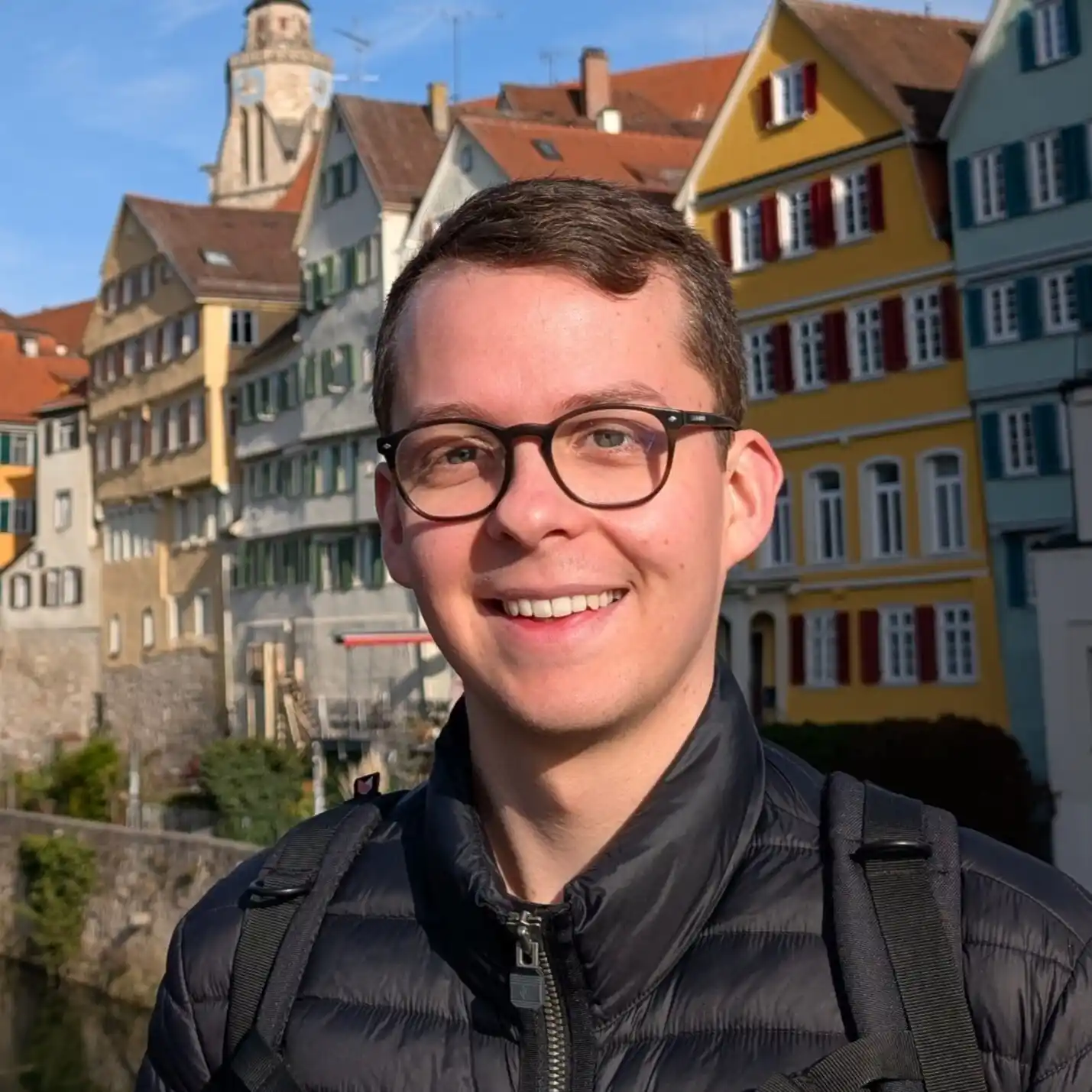
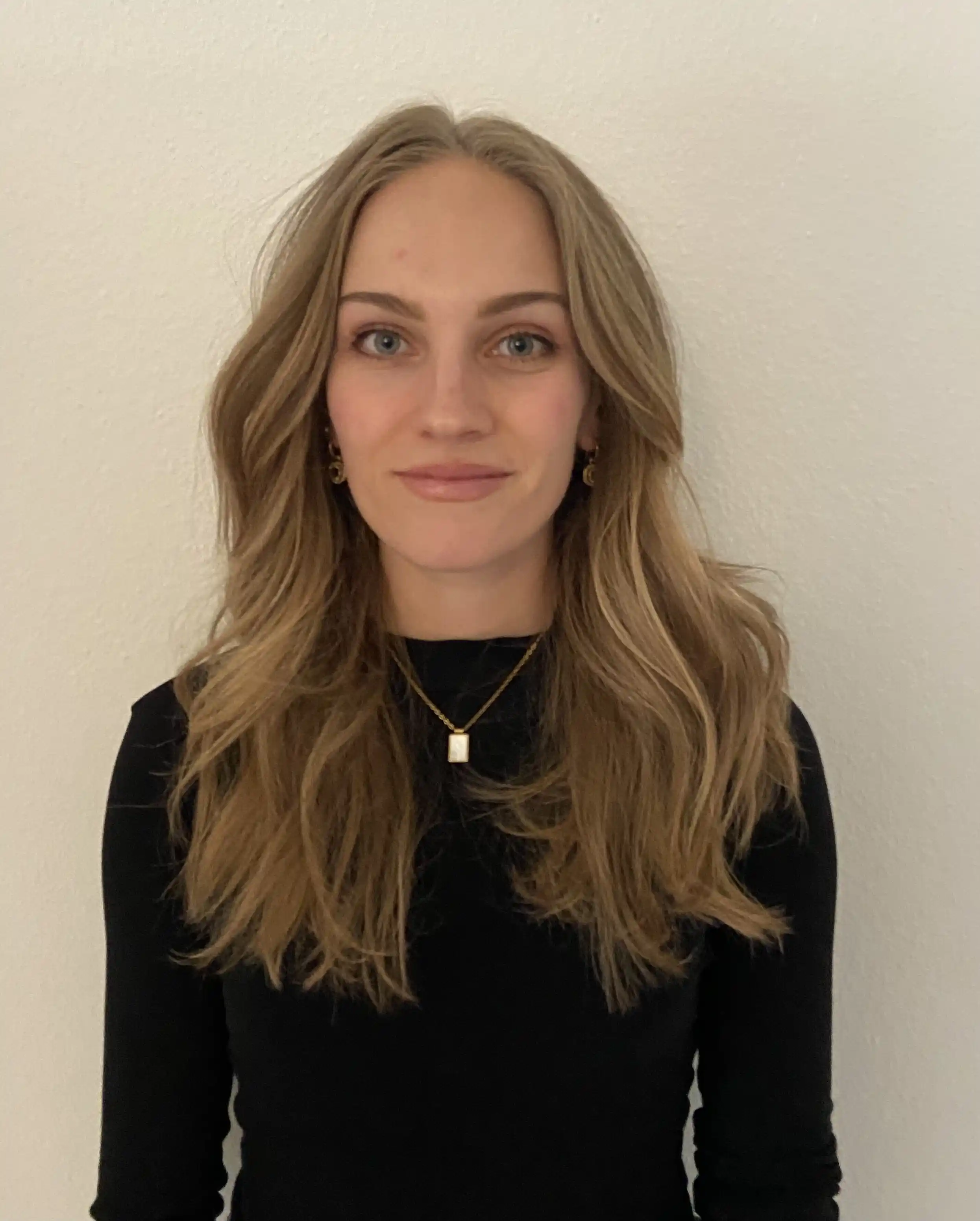
Mario Krenn

Mario Krenn

Professor

Excited about the future of AI-augmented ideas and concepts in science, and in general about the acceleration of science and technology through artificial intelligence.

Michael Mergner

Michael Mergner

Group Admin

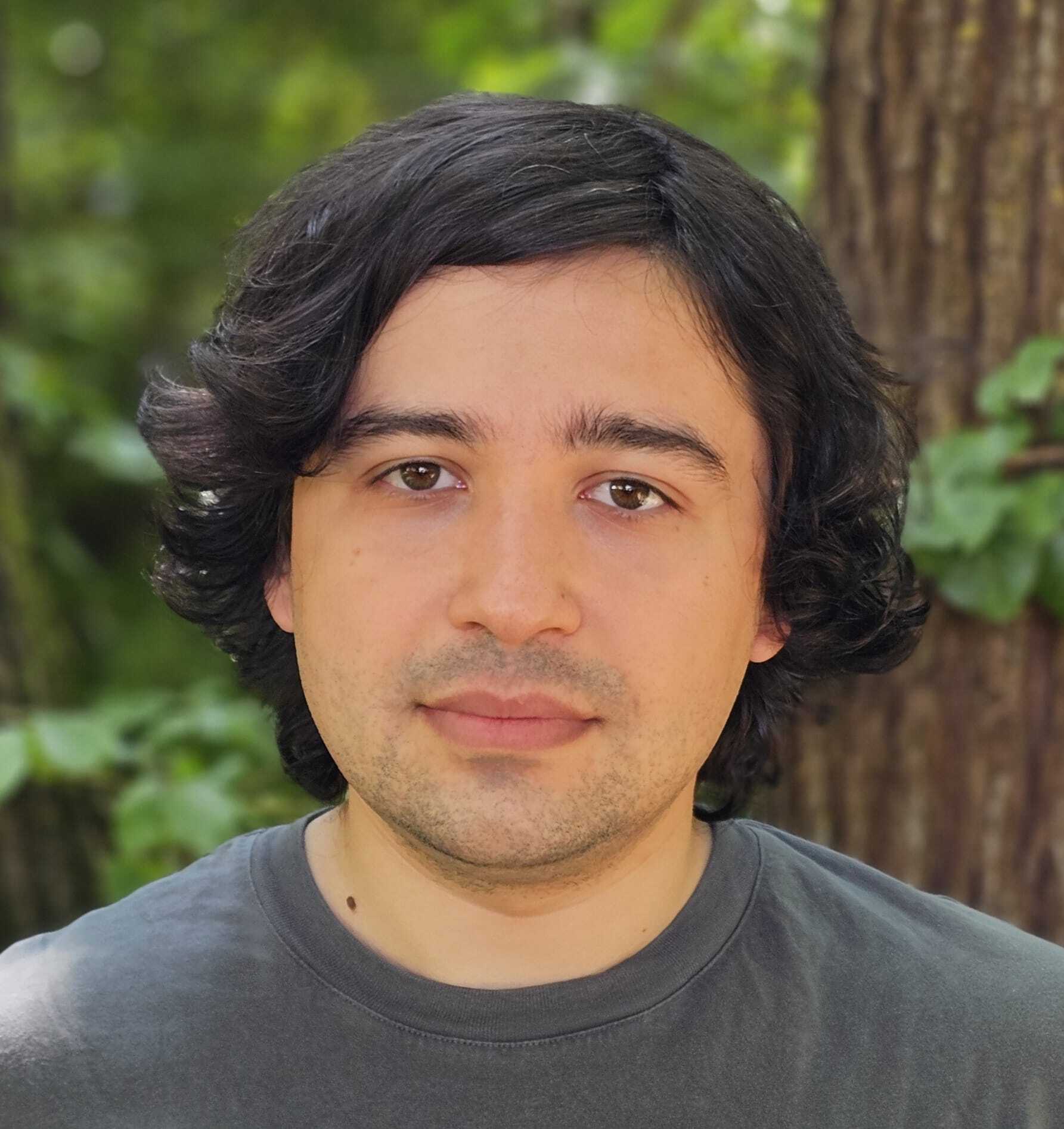
Marcello Armezzani

Marcello Armezzani

PhD student

Fascinated by the innovations that AI can bring to the study of physics, both in its experimental applications and especially in its epistemological foundations. Other more or less related interests include: philosophy of science, postmodern novels, playing and (nowadays mostly) watching rugby.

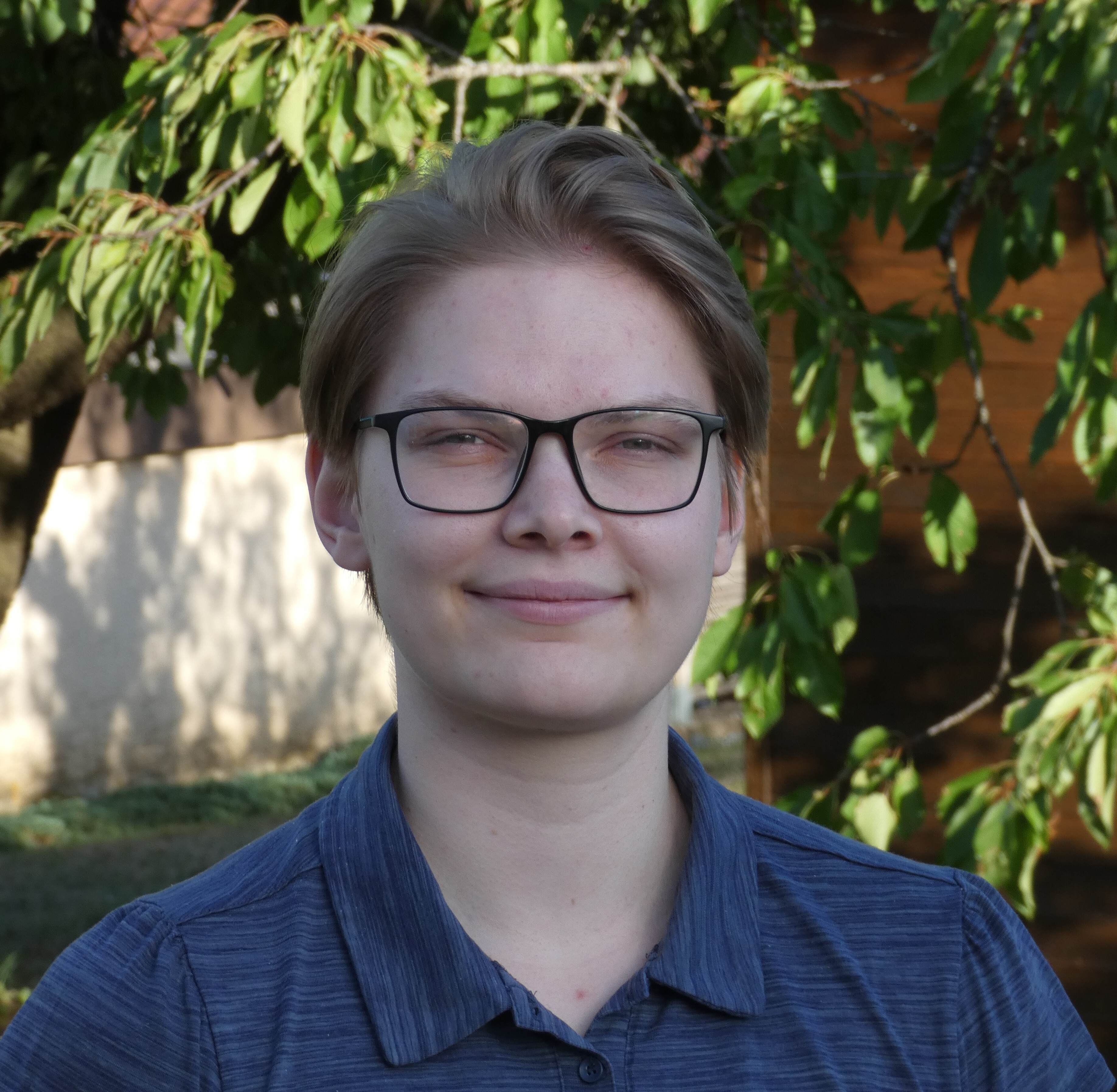
Sören Arlt

Sören Arlt

PhD student

I enjoy thinking about computer-inspired physics and other interesting things. I like going on adventures in nature as well as learning new skills (some can be useful, one is riding a unicycle).

Soham Basu

Soham Basu

PhD student

I am interested in developing efficient algorithms for exploration and optimization in large, complex search spaces, with a particular focus on Bayesian Optimization and Deep Learning-based approaches.

Tareq Jaouni

Tareq Jaouni

PhD student

Joint PhD student with Dr. Ebrahim Karimi's Structured Quantum Optics group at the University of Ottawa. Intrigued by what sort of novel ideas in physics can be concocted by an artificial scientist. Primary interests include food, cycling, coding, Pokémon, reading out loud, and role-playing.

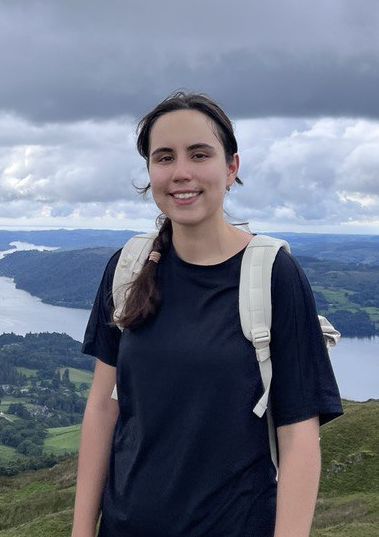
Priya Kanagasabapathi

Priya Kanagasabapathi

PhD student

Interested in how agentic systems and large language models can support scientific discovery by generating, evaluating, and refining research ideas. I am especially curious about their role in accelerating creativity and reasoning in science.

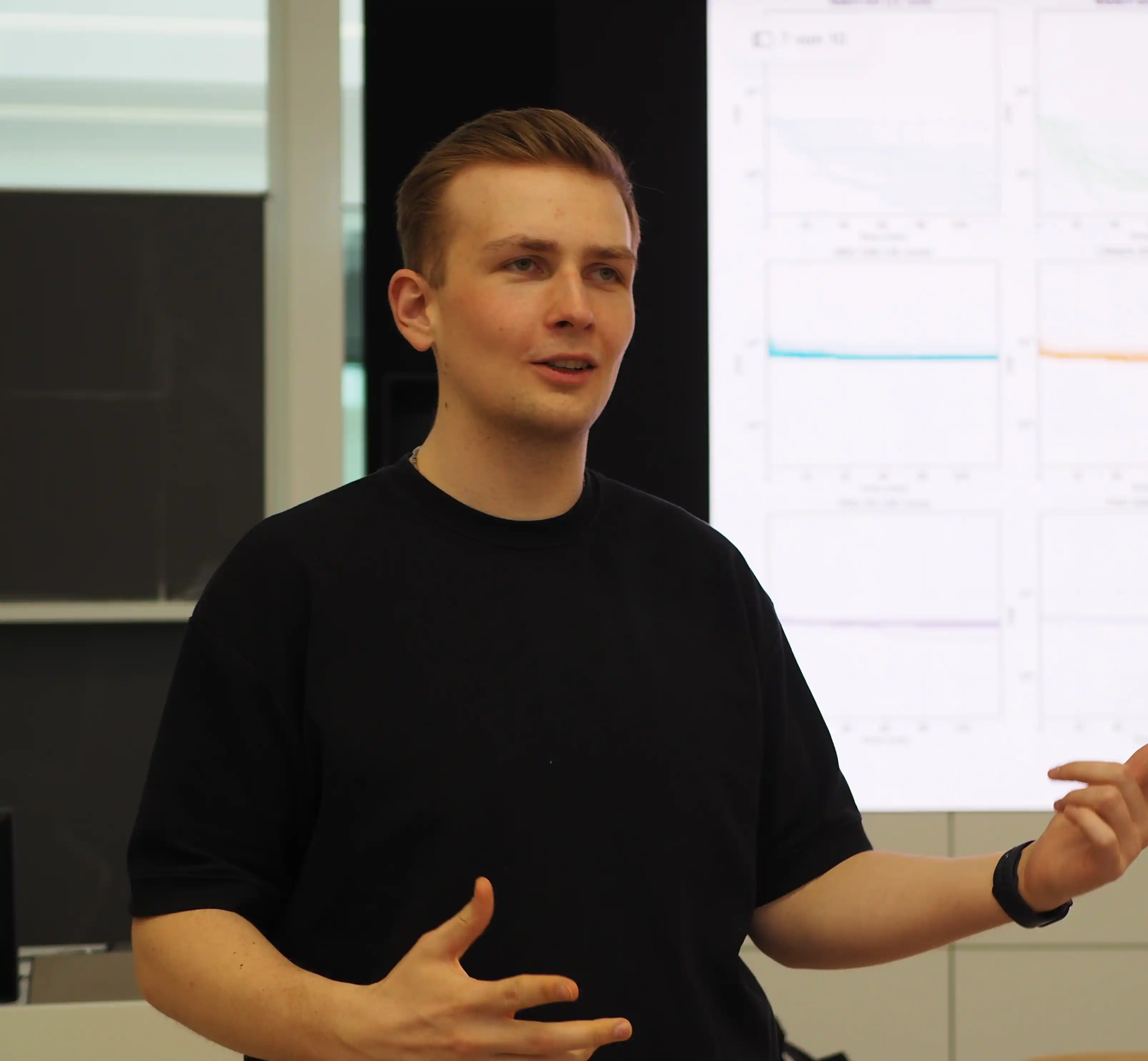
Jonathan Klimesch

Jonathan Klimesch

PhD student

Interested in Differentiable Simulations and diverse AI algorithms for the discovery of novel, but human-understandable concepts for gravitational wave detectors.

Pontus Lindgren

Pontus Lindgren

PhD student

Excited about discovering physics concepts using AI. A key challenge is how to turn simulated solutions into understanding. I am particularly interested in broadening the scope of AI discoveries. In my spare time I like to run outdoors, especially orienteering.

Carlos Ruiz González

Carlos Ruiz González

PhD student

Always curious about unexpected phenomena and applications from Quantum Physics. Also interested in Social Sciences, Music, Cooking, Science Fiction, and, of course, Artificial Intelligence. At some point I expect to beat Mario at Go.

Carlo Wenig

Carlo Wenig

PhD student

Raphael Jontofsohn

Raphael Jontofsohn

Bachelor student

Laurin Sefa

Laurin Sefa

Bachelor student

Fascinated by and curious about the unintuitiveness and novelty of machine-designed concepts in AI-driven science discovery. Big fan of music, cooking, handball, my friends, philosophical talks, movies (especially Sci-Fi), and board games!

Felice Huck

Felice Huck

Research Intern

Interested in the intersection of psychology and AI, especially in understanding how humans explore and learn, and how this can help build more autonomous AI systems for scientific discovery. In my free time, I enjoy playing tennis.

Former Members

Alumni

  • Carla Rodriguez

    Postdoctoral researcher

    July 2022 - April 2025

    Currently: AI Scientist at HHMI (Janelia, Washington DC)

  • Xuemei Gu

    Alexander-von-Humboldt Postdoctoral Fellow

    August 2022 - January 2025

    Currently: Junior Research Group Leader (University of Jena)

  • Lode Vermeulen

    External bachelor student

    March 2024 - July 2024

    Download Thesis
  • Philipp S. Schmidt

    Master student

    March 2023 - March 2024

    Currently: PhD student at University of Heidelberg

    Download Thesis
  • Juilee Kulkarni

    Master student

    December 2021 - December 2022

    Download Thesis
  • Jan Petermann

    Bachelor student

    July 2022 - November 2022

    Download Thesis

Archive

Group Pictures

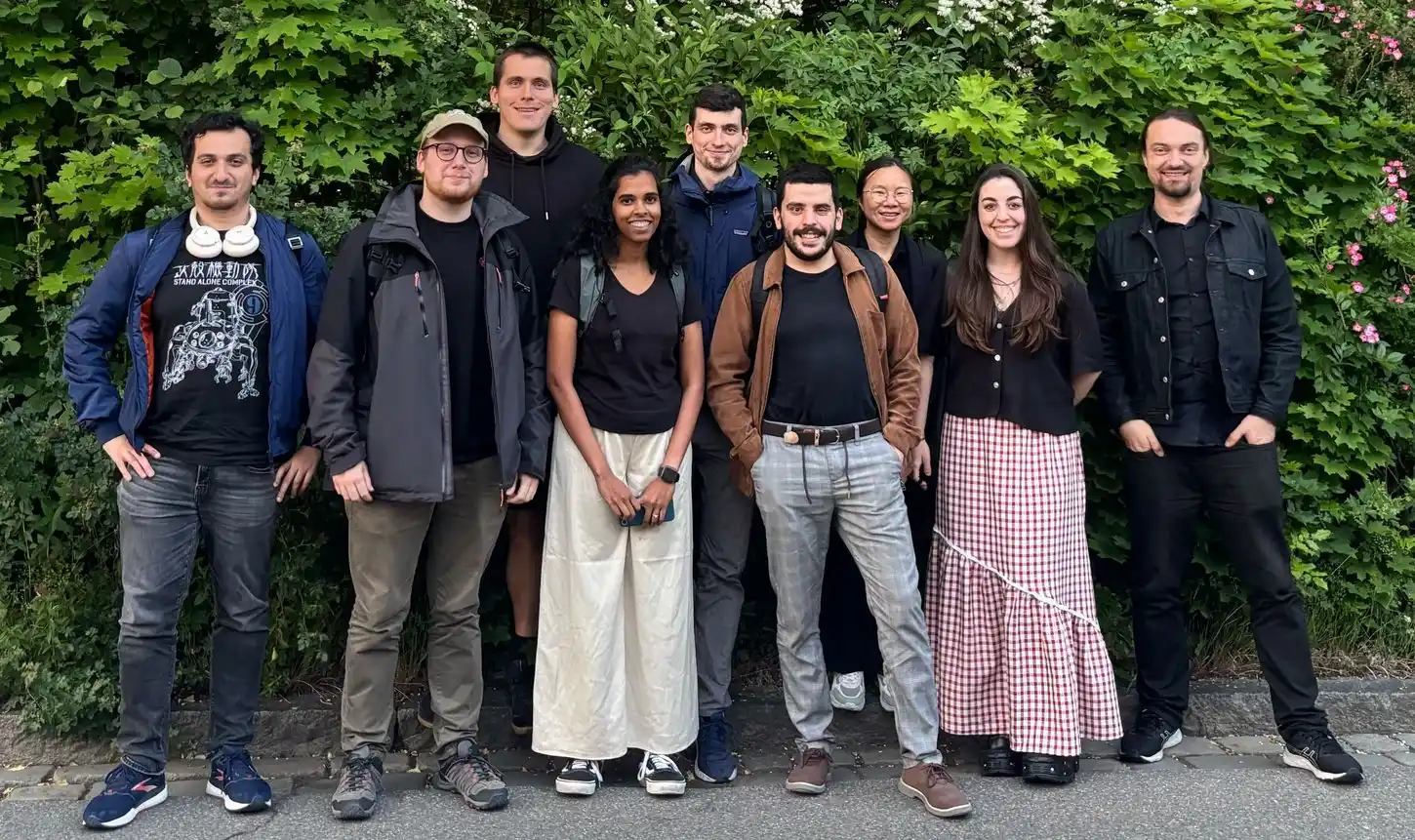
Artificial Scientist Lab group picture from May 2025

May 2025

Tareq, Marcello, Sören, Priya, Jonathan, Carlos, Xuemei, Carla, Mario

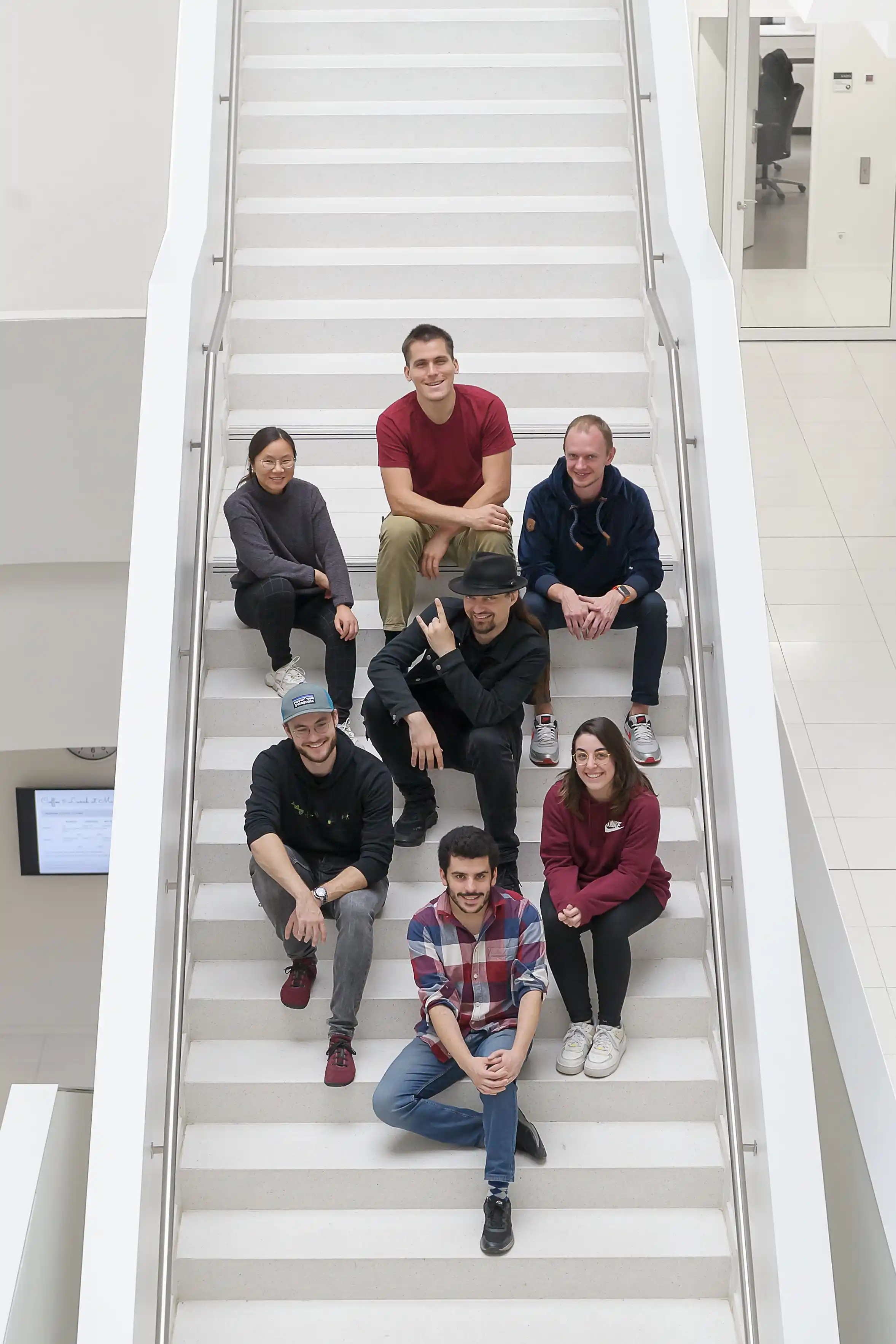
Artificial Scientist Lab group picture from October 2023

October 2023

Xuemei, Sören, Olek, Carla, Carlos, Philipp, Mario

Artificial Scientist Lab group picture from July 2022

July 2022

Mario, Carla, Juilee, Carlos, Sören, Jan, Burak, Tareq

Artificial Scientist Lab group picture from March 2022

March 2022

Mario, Carlos, Juilee, Sören

Research

The Science in the Artificial Scientist Lab

AI-designed experiments

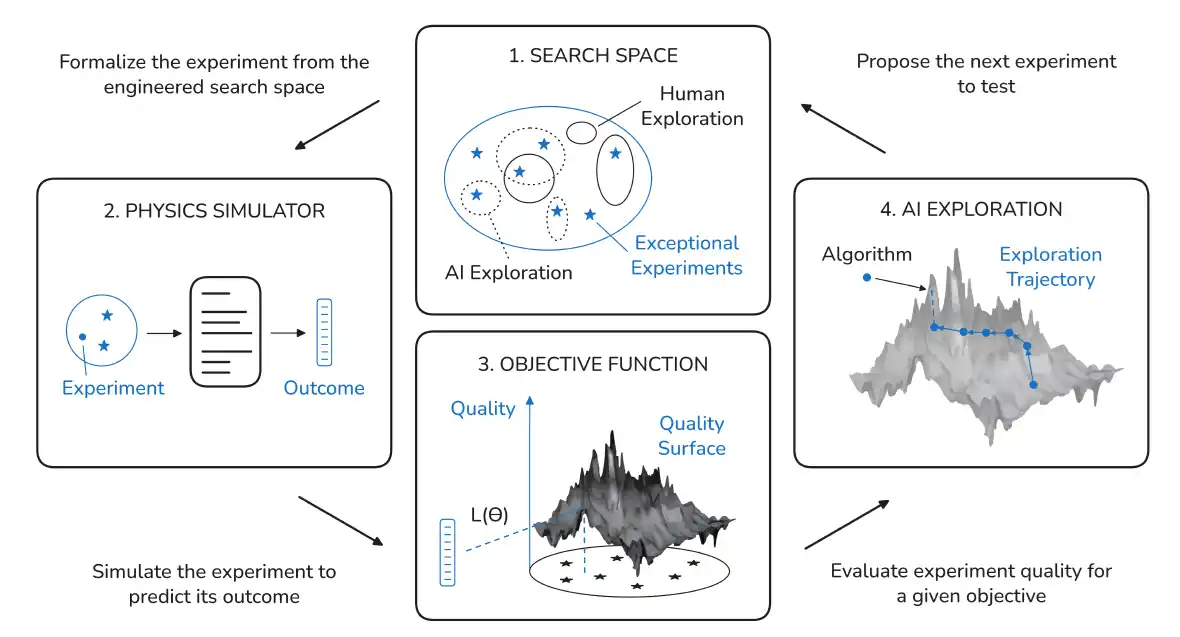
Experiments are our windows to the universe. Yet, the space of all possible experiments is enormously large. Did humans already find all useful experiments, or are there yet undiscovered but exceptional experimental ideas that can lead to new ways to explore the world?

We can split this question into four pillars: extremely large and complex search spaces, fast and reliable simulators, meaningful objective functions, and clever AI-exploration algorithms.

Diagram showing a workflow for AI-designed experiments with search space, physics simulator, objective function, and AI exploration.

AI-designed Quantum Experiments: We started using AI for the design of physics experiments in 2014, published in 2016, where our first program Melvin discovered numerous new experiments for high-dimensional multipartite quantum entanglement, several of which were later built in laboratories: Nature Photonics 2018, Nature Photonics 2016, and Phys. Rev. Lett. 2017. These solutions contained surprising results, and we were able to conceptually understand several of them, for example an entirely new way to create photonic quantum entanglement, denoted as Entanglement by Path Identity, as well as a new bridge between quantum optics and graph theory that led to the discovery of new interference effects.

Since then we have developed many further methods. PyTheus (spearheaded by Carlos Ruiz González and Sören Arlt) is an algorithm for designing vastly diverse quantum experiments, for quantum state generation, the design of single- and multi-photon transformations, and new communication protocols. One surprising new discovery, a new way to entangle independent photons, has been experimentally implemented by the experimental group of Xiaosong Ma in Nanjing, China, a former PhD colleague of Mario from Anton Zeilinger's lab: Phys. Rev. Lett. 2024.

AI-designed microscopes: Driven by human ingenuity and creativity, the discovery of super-resolution techniques, which circumvent the classical diffraction limit of light, represents a leap in optical microscopy. However, the vast space of possible experimental configurations suggests that some powerful concepts and techniques might not have been discovered yet, and might never be discovered through a direct human design approach. AI-based exploration techniques could therefore provide enormous benefits by exploring this space in a fast, unbiased way. We developed XLuminA (spearheaded by Carla Rodriguez), an open-source computational framework built with JAX, a high-performance computing library for Python. XLuminA speeds up simulation by four orders of magnitude, allowing us to explore the space of possible microscope concepts much faster than before.

AI-designed Gravitational Wave Detectors: Gravitational waves are created by some of the most extreme events in the universe, such as the collision of black holes or the explosion of stars. These ripples of space-time then propagate through space towards Earth. When they reach us, they are extremely faint signals. It took 100 years since their prediction by Einstein to detect them. That became possible in 2016 through the international LIGO collaboration. The experiment built by LIGO is an interferometric system based on Michelson's interferometer, designed by ingenious human scientists. The question is: did humans find the best way to measure gravitational waves, or are there practical new experiments that are significantly more sensitive? Together with Rana Adhikari and Yehonathan Drori from the Caltech LIGO Lab, we are exploring this question using AI. We discovered more than 50 blueprints that, at least theoretically, outperform the best previous setups. We spent months exploring the best-performing solutions, and while we were able to extract simple conceptual cores from some of them, we were unable to understand the big picture behind most of the solutions. This indicates an important challenge for the future of AI-driven scientific discovery.

Similar to the microscopy case, we took the original simulator for gravitational-wave optics, Finesse, developed by Andreas Freise's group, and reproduced its crucial core in JAX, which provided an enormous speed-up. The simulator, Differometor, was developed by Jonathan Klimesch.

Understanding AI-solutions

If an AI discovers solutions that outperform all human solutions, it must contain new tricks and ideas that we could learn from. As scientists, we want to understand these new tricks and concepts discovered by the machine.

Diagram showing meta-designing a class of experiments with synthetic data, a language model, and generated general rules for designing experiments of arbitrary size.

The first time we faced this problem was in a case where our algorithm Melvin discovered new high-dimensional multipartite entangled systems that seemed to be more strongly entangled than previously thought possible. After analyzing the solutions for weeks, we found that it had discovered an entirely new way to generate quantum entanglement in photonics. We described this technique as Entanglement by Path Identity. In another instance, we investigated entanglement generation with PyTheus. We discovered that PyTheus invented a new trick to generate high-dimensional entanglement: it discovered a structure resembling a probabilistic multi-photon emitter just by building two-photon emitters. When we understood this technique, we were immediately able to generalize it to other situations. This new principle, spearheaded by Sören Arlt, was published as Emulating multiparticle emitters with pair-sources: digital discovery of a quantum optics building block.

A crucial step is the idea of Meta-Design (see the figure above, pioneered by Sören Arlt). Here, instead of designing solutions for individual questions and trying to understand them afterwards, we trained a language model that produces Python code. The resulting Python code solves whole classes of questions at once. Instead of having to analyze each solution independently, we can inspect the generated Python code, which contains the main principle of a generalizable solution.

Scientific Ideas from AI

How can we use millions of scientific papers to create personalized, interesting, and high-impact ideas?

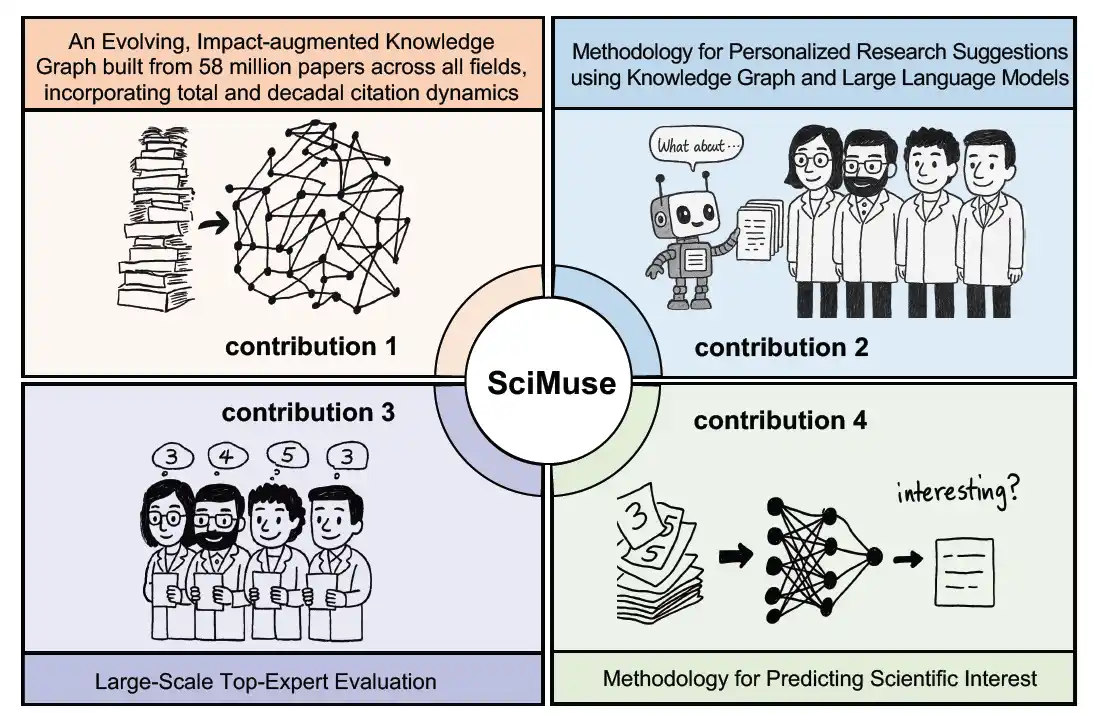
SciMuse diagram showing contributions from a large-scale knowledge graph, personalized research suggestions, expert evaluation, and scientific-interest prediction.

Inspired by the work of computational sociologists and network theorists, for example James Evans, Jacob Foster, Albert-Laszlo Barabasi, and many others, who showed how to compress information from millions of scientific papers into knowledge graphs and make quantitative statements about the research community as a whole, we aimed to do the same for quantum physics. Thus, in 2020, we developed SemNet, where we built a knowledge graph for quantum physics based on 650,000 papers written over 100 years. This evolving knowledge graph allowed us to predict what researchers will work on in the future, based on what they worked on in the past. The predictive performance was surprisingly high. Three years later, we ran an AI competition called Science4Cast on a closely related topic, the prediction of new topic combinations from a knowledge graph, with similarly strong predictive performance.

An important question is whether one can also predict which research directions that have never been investigated before will be of high impact in the future. For that, spearheaded by Xuemei Gu, we developed Impact4Cast, a knowledge-graph system augmented with citation information, which uses supervised neural networks to predict which future works will have high impact.

Ultimately, we are interested in whether these predictions could actually be useful. For that, we launched the project SciMuse: we performed a large-scale interdisciplinary evaluation of research ideas generated using connections between knowledge graphs and LLMs and evaluated them with more than 100 research group leaders in the Max Planck Society. Doing so produced a dataset of more than 4,500 human-expert-evaluated research ideas, which we can use to predict the interest level of an idea before it is even fully defined. This will be a crucial capability of future artificial scientists.

Autonomous Science and Philosophical Implications

How can we develop curious and creative artificial scientists, and what are the epistemic consequences, for example for scientific understanding?

Illustration related to autonomous science and philosophical implications in the Artificial Scientist Lab.

We have developed AI-Mandel, an agent system that can autonomously generate scientific ideas and then execute these ideas using intelligent tools such as PyTheus. To demonstrate that it works, we used two outputs of AI-Mandel and wrote scientific papers about their results: Automated Discovery of Non-local Photonic Gates and Automated discovery of high-dimensional multipartite entanglement with photons that never interacted.

The quest to create artificial scientists comes with important questions about science itself. For example, what should we do if we can no longer understand AI-generated solutions? What does it even mean to "understand" in a scientific context? Addressing this question, we wrote a perspective paper called On scientific understanding with artificial intelligence, based on dozens of comments from domain experts in biology, chemistry, physics, and AI research. Specifically, the paper classifies algorithms into three categories, Computational Microscope, Artificial Muse, and Agent of Understanding, and shows how AI can extend scientific understanding.

Most recently, in Philosophy of Autonomous Science: Ten Questions for the Coming Age of Artificial Scientists, we argue that the move from powerful AI tools to autonomous scientists is not only a technical challenge, but also a philosophical and conceptual one. The Philosophy of Autonomous Science (PAS) program asks how core epistemic aims such as understanding, curiosity, surprise, interest, creativity, and novelty can be translated into computable, nonanthropocentric objectives for artificial scientists. Drawing on our research experience, we outline ten questions for PAS and invite philosophers, scientists, and AI researchers to shape the principles for safe and successful autonomous scientific discovery.

Papers

Publications

2026

2025

2024

2023

2022

2021

Code

Open-Source Repositories

Join Us

Join the Team

We welcome applicants and students who want to work on AI for physics discovery. We have open postdoc and PhD positions (see call below).

For the students at the University of Tübingen, we are happy to supervise Master and Bachelor thesis and interships. Reach out to Mario.

Open Position Call

Contact

Contact

You can reach Mario via e-Mail. For organisational requests (or if Mario is slow in replying), please reach out to Michael.

Funding

We acknowledge the European Research Council for awarding us an ERC Starting Grant in 2024 called ArtDisQ (Artificial Scientific Discovery of Advanced Quantum Hardware with high-performance Simulators), and we acknowledge the German Research Foundation (DFG) for funding through the Excellence Cluster "Machine Learning in Science" at the University of Tübingen.

Funding logos and acknowledgements for the Artificial Scientist Lab.